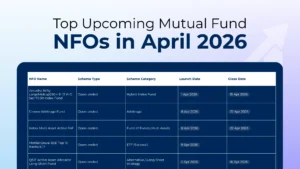
If you’ve ever explored mutual funds, you might have come across the term NFO and wondered:
“Is this like an IPO in stocks? Should I invest in it?”
But before you jump in, it’s important to understand what an NFO really is, how it works, and whether it deserves a place in your portfolio.
What is an NFO?
An NFO (New Fund Offer) is the first-time launch of a mutual fund scheme by an asset management company (AMC). It’s simply the entry point where investors can subscribe to a newly created fund before it officially becomes available for regular investment.
It is similar in concept to an IPO in the stock market, but instead of shares, you are investing in a mutual fund scheme.
During the NFO period, units are typically offered at a base price of ₹10 per unit. This is simply the starting value and should not be interpreted as an indicator of the fund being inexpensive or having higher return potential.
How Does an NFO Work?
The process is fairly straightforward, but understanding the sequence helps:
– A fund house identifies an investment opportunity or strategy (for example, manufacturing, ESG, or a hybrid allocation model)
– It launches an NFO and opens it for subscription for a limited window (usually 7-15 days)
– Investors can invest during this period at the initial price
Once the NFO closes:
– Units are allotted
– The fund begins deploying money into the market
– The Net Asset Value (NAV) starts fluctuating based on market performance
From that point onwards, the fund functions like any other mutual fund scheme.
Types of NFOs in Mutual Funds
Not all NFOs work the same way. One of the key differences lies in how easily you can invest or withdraw your money after the NFO period.
1. Open-Ended NFOs
Open-ended NFOs are the more flexible option.
- After the NFO period ends, the fund stays open for investments
- You can buy or sell units anytime at the current NAV
- There’s no fixed lock-in period
2. Close-Ended NFOs
Close-ended NFOs come with a fixed structure.
- You can subscribe to the fund only during the NFO phase
- After that, your money is locked in for a specific period, usually 3 to 5 years
- You generally cannot redeem your investment before maturity
Important Points to Consider Before Investing in an NFO
Before investing in any NFO, it is essential to evaluate it carefully. Here are some factors to look for:
1. Investment Strategy and Objective
Before anything else, understand what the fund is actually trying to do. Every NFO comes with a specific strategy, whether it’s investing in a theme, a sector, or a particular mix of assets. If the strategy feels too complex or unclear, it’s better to pause. You should always be comfortable with where your money is going and why.
2. Availability of Similar Funds
Before investing in an NFO, check whether similar mutual funds already exist in the market. Many times, the strategy being offered is not entirely new. Look at whether there are funds with a comparable approach and, more importantly, whether they have a proven track record.
3. Track Record of the Fund House
Even though the fund is new, the asset management company (AMC) managing it has an existing history. It is important to evaluate the credibility of the fund house, how its current schemes have performed over time, and the experience of the fund management team.
4. Risk Involved
Some NFOs, especially those focused on a specific sector or theme, can be quite volatile. It’s important to ask yourself whether you’re comfortable with that level of risk. If a fund is likely to see ups and downs, you should be mentally prepared for it. Otherwise, it becomes difficult to stay invested when markets don’t go your way.
5. Alignment with Your Financial Goals
Avoid investing in an NFO simply because it is new or being widely marketed. Instead, evaluate whether the fund fits into your overall investment plan and whether it helps you achieve a specific financial goal. Every investment you make should have a clear purpose within your portfolio.
6. Costs and Expense Ratio
Costs are something most people ignore, but they quietly affect your returns. Every fund charges an expense ratio for managing your money. Even a slightly higher cost, over the long term, can eat into your gains. So it’s worth checking what you’re paying and whether it’s justified.
Conclusion
NFOs are just new entrants in the mutual fund space; they don’t automatically make for better investments. What truly matters is whether the fund adds real value to your portfolio and aligns with your financial goals. Instead of deciding in a hurry, take some time to understand how the fund works, the risks involved, and how it fits into your portfolio.
If you’re considering investing in NFOs and want clearer direction, you can connect with Ashvvy Investments for structured guidance and more informed decision-making.